
Starting Your Own Equine Assisted Coaching Business

There comes a point in the certification journey when the focus begins to shift. For the first part of the process, so much of the energy goes into learning the work itself—how to be present, how to observe without rushing to interpret, how to ask better questions, how to trust the process, how to honor the horse, and how to create a safe and ethical space for the client. Then, somewhere along the way, the conversation starts to change. Instead of only talking about how to coach, students begin asking what it will look like to actually build a business around the work they have learned.

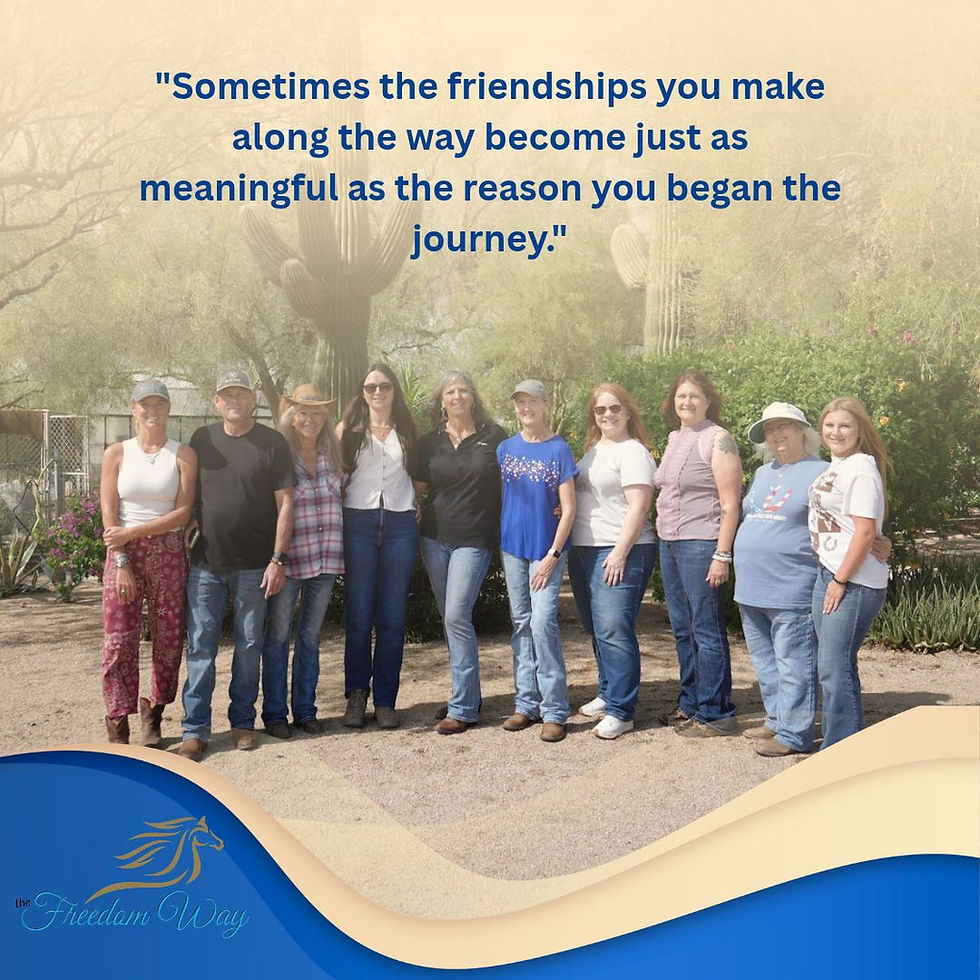
We are in that stage right now with our current group of Freedom Way students. We recently completed the in-person retreat portion of the certification, where they were able to take what they had been learning in class and begin applying it with the horses and actual clients. Now they are completing their case studies, and our most recent classes have been centered around the business side of becoming an equine assisted coach.
This part has been especially fun for Diana and I to watch because everything begins to shift for our coaches. They are choosing business names, creating logos, researching insurance, thinking about where they might see clients, writing their bios, and getting clearer about the type of people they feel most drawn to work with. They are also starting to think more carefully about how they want to talk about their work, what they want people to understand about it, and how they can begin marketing themselves without feeling like they have to become someone they are not.
One of the first things we encourage them to think about is who they actually want to serve. It is easy to start with a broad idea like, “I want to help people,” but building a business becomes much easier when you begin to understand who you feel especially connected to. For one coach, that may be women going through major life transitions. For another, it may be teenagers, caregivers, veterans, families, leaders, or people who have spent years putting everyone else first. Someone else may want to work with those struggling with addiction or going through trauma/PTSD. Choosing a specific clientele doesn't mean that you can never work with anyone outside of that group. It simply gives your work some direction and helps you begin speaking to the people who are most likely to connect with what you offer.
From there, the business starts to develop its own identity. Choosing a name can take longer than people expect because the right name feels more personal. It may reflect a value, a story, a relationship with horses, or the kind of experience the coach hopes to create for clients. The same is true with a logo, colors, a website, or social media pages. These things are important but they don't have to be perfect before you begin. A brand is not only what your business looks like. It's also how people feel when they interact with you, how clearly you communicate your values, how you speak about the horses, and whether the experience you create feels consistent with what you say you believe.
There are also the practical pieces that need to be considered. New coaches need to think through insurance, business registration, client forms, informed consent, policies, scheduling, payment systems, emergency procedures, and whatever local requirements apply to their situation. If they are working at someone else’s barn or partnering with an equine facility, there are additional conversations to have around responsibilities, horse care, property use, liability, and how the arrangement will work. These parts of creating a business aren't as exciting as choosing a name or designing a logo, but they are part of building it responsibly.
Another thing we talk about is not trying to create every possible service all at once. When people first begin, they often feel pressure to have individual sessions, groups, workshops, retreats, corporate programs, youth programs, couples sessions, and everything in between. In reality, it is usually much easier to begin with one or two offerings that feel natural and manageable. A coach can always expand later as their confidence, experience, and understanding of their client's needs grows.
Writing a bio is another part of the process that seems simple until you sit down to do it. Most people don't naturally enjoy writing about themselves, and it can be difficult to find the balance between sounding professional and sounding like a real person. A strong bio doesn't need to be overly impressive or filled with complicated language. It simply needs to help someone understand who you are, why this work is important to you, what experience or training you bring, and who you most enjoy working with. People are not only deciding whether they are interested in equine assisted coaching. They are also deciding whether they feel comfortable reaching out to you.
Marketing can bring up its own set of nerves, especially for people who don't want to feel pushy or overly promotional. We remind our students that marketing does not have to mean constantly selling themselves. At its best, marketing is simply communication. It is helping people understand what you do, why you are passionate about it, what makes your approach different, and whether it may be a good fit for them. It can be sharing what you believe about the work, answering common questions, talking about the role of the horse, or telling stories that help people understand what an experience might feel like. The goal isn't to create a polished version of yourself that sounds completely different online than you do in person. The goal is to become clearer about what you offer and learn how to talk about it in your own voice.
As students begin thinking about building a business, we also keep returning to something that is deeply important to us, and at the heart of The Freedom Way: the business cannot grow at the expense of the horse. It is easy to become focused on numbers, scheduling, marketing, and getting clients in the door, but the horse still has a voice in all of this. Coaches need to pay attention to how much work is appropriate for each horse, whether the horse enjoys participating, whether they have the freedom to disengage, and whether their physical and emotional needs are being respected. A successful business should never depend on asking anything more of the horse other than allowing them to choose to be a partner in the session.
The truth is that no one has every piece figured out when they start. The website will probably change. The bio will probably change. The services may change. The clients you thought you wanted to work with may shift as you gain more experience. You may discover that one idea you were excited about doesn't feel right once you try it, while something else begins to take shape that you never expected. That is part of building a real business.
That is what has made this stage with our current students so rewarding to watch. They are still finishing their certification journey, but at the same time, they are beginning to imagine what comes next. Ideas are turning into names. Names are becoming logos. Experiences are becoming areas of focus. Conversations are happening about insurance, websites, barns, clients, programs, and what each person wants their work to stand for.
There is a different kind of confidence that begins to emerge when someone realizes that this is no longer just something they are learning. It is a career that they are actually building.
Starting an equine assisted coaching business doesn't mean having everything perfectly planned before you begin. It means taking what you have learned, staying grounded in your values, continuing to grow as a coach, protecting the well-being of the horses, and gradually creating something that feels like your own. The business will continue to evolve, just as you will, but every thoughtful step makes it a little more real.
Are you looking to start your own Equine Assisted Coaching Business?
If the answer is yes, The Freedom Way® Equine Assisted Coaching Certification may be the path your soul has been waiting for.


Comments